
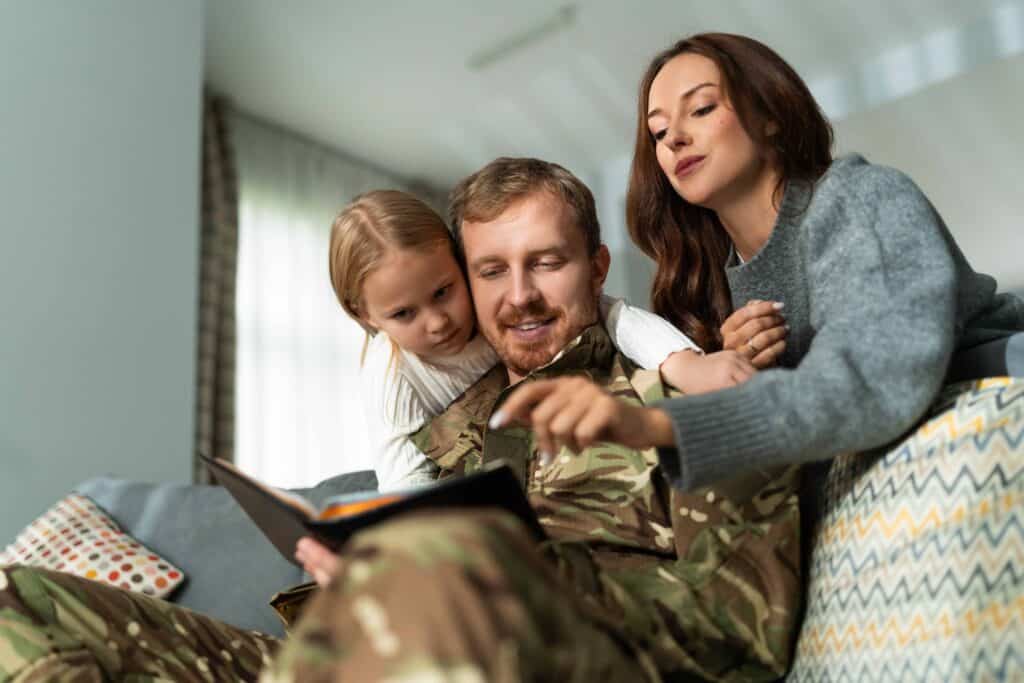
For many veterans, returning home marks the end of deployment, but not the end of combat stress.
The transition from military service to civilian life can bring relief, pride and reconnection. It can also bring hypervigilance, emotional distance, irritability or difficulty adjusting to a different pace and structure. For families, especially children, this period can feel confusing and unpredictable.
Combat trauma does not stay confined to the battlefield. It can show up quietly at home – in relationships, parenting, and daily routines.
Supporting veterans in civilian life means understanding that reintegration is not just logistical. It is neurological, emotional and relational.

What Combat Trauma Looks Like at Home
Combat trauma and post-traumatic stress do not always present as dramatic flashbacks. Often, they appear in subtle, everyday ways.
Veterans may experience:
- Heightened startle response
- Difficulty sleeping
- Irritability or emotional reactivity
- Avoidance of certain topics or environments
- Emotional numbness
- Feeling disconnected from family life
At home, these symptoms can be misunderstood as moodiness, withdrawal or lack of engagement. In reality, they are often signs of a nervous system that is still operating in survival mode.
The Nervous System After Combat
During deployment, the brain adapts to constant threat assessment. Hypervigilance becomes protective. Quick reactions are necessary. Emotional suppression can be functional.
But once home, those same adaptations can create tension.
The nervous system may struggle to shift from combat readiness to domestic safety. This mismatch can affect:
- Communication with partners
- Patience with children
- Comfort in crowds
- Ability to relax
Understanding trauma through a nervous system lens reduces blame and increases compassion for both veterans and their families.

The Impact on Military Children
In the Month of the Military Child, which is celebrated every April, it’s important to recognize that reintegration affects the entire family system.
Children may notice:
- Changes in a parent’s mood
- Increased tension at home
- Emotional unpredictability
- Withdrawal or irritability
Children do not need detailed explanations of trauma, but they do need consistency, reassurance, and emotional safety.
Supporting military children means supporting the parent navigating combat stress.

When Reintegration Feels Harder Than Deployment
Some veterans report that coming home feels more disorienting than deployment itself.
In deployment:
- Roles are clear
- Structure is defined
- Purpose is immediate
At home:
- Expectations shift
- Parenting roles may feel unfamiliar
- Emotional needs increase
- Identity questions surface
Partners may also struggle with the transition. The at-home spouse may have established routines and independence during deployment. Rebalancing responsibilities can create friction, even with the best intentions.
These challenges are common, and most importantly, treatable.

How Therapy Supports Veterans and Families
Therapy provides a structured space to slow down and process experiences that may have been compartmentalized during service.
For Veterans
Therapy can help:
- Reduce hypervigilance
- Improve emotional regulation
- Address combat-related memories
- Rebuild connection at home
- Process moral injury or loss
For Partners
Therapy supports:
- Communication
- Understanding trauma responses
- Rebuilding trust and closeness
For Families
Family-focused support can help restore stability and create a shared language around stress and healing.
How EMDR Can Help with Combat Trauma
EMDR (Eye Movement Desensitization and Reprocessing) therapy is highly effective for combat trauma and PTSD.
EMDR can help:
- Reprocess distressing memories
- Lower the emotional intensity of triggers
- Reduce reactivity
- Improve sleep
- Restore a sense of safety
Rather than repeatedly retelling traumatic events, EMDR allows the brain to integrate them in a way that reduces their present-day impact.

Strengthening Families Through Healing
Healing from combat trauma is not just about symptom reduction. It is about rebuilding connections.
When veterans receive support:
- Parenting becomes more regulated
- Communication improves
- Children experience greater stability
- Relationships deepen
Seeking support is not a sign of weakness. It is a commitment to long-term resilience.
A Path Forward for Military Families
At Nova Psychotherapy Services, we provide trauma-informed therapy for veterans and military families navigating the challenges of reintegration. Whether you’re adjusting to civilian life, managing combat-related stress, or seeking support for your family, healing is possible.
You do not have to carry combat stress alone – and your family does not have to navigate it without support.