
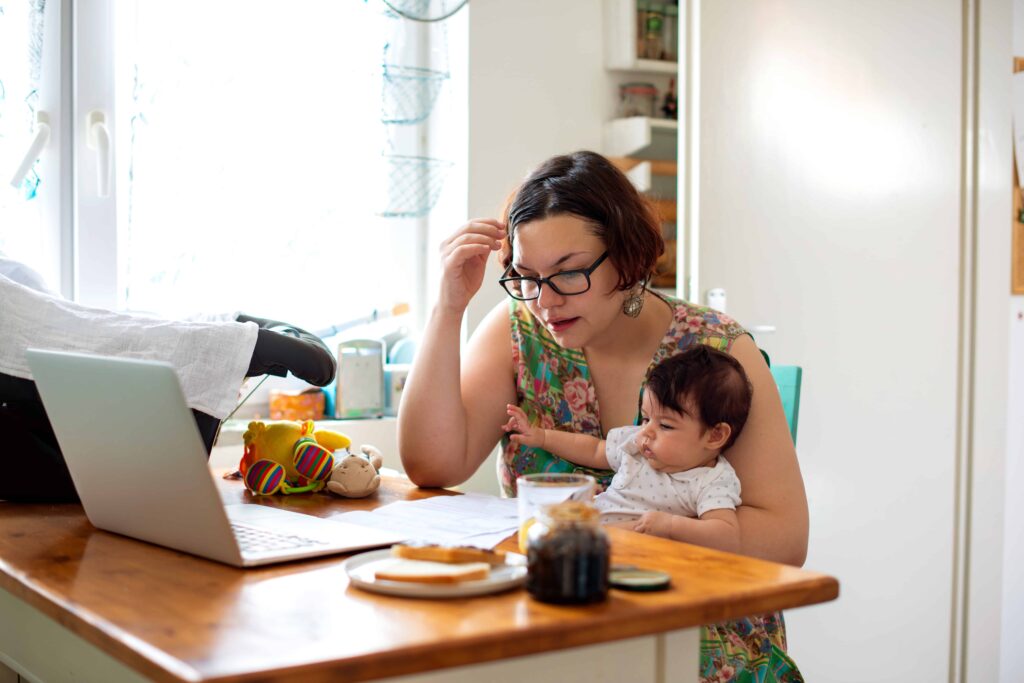
Returning to work after maternity leave is often framed as a milestone: a sign that life is getting “back to normal.”
But for many mothers, going back to work happens long before they feel emotionally ready.
Your body may be physically cleared. Your baby may be healthy. Your inbox may be waiting. But inside, you may still be carrying the weight of a difficult birth, postpartum anxiety, NICU stress, feeding struggles, sleep deprivation, identity shock, or grief over leaving your baby before you feel prepared.
Returning to work does not mean healing is complete.
For some mothers, the end of maternity leave can reactivate trauma responses that have been quietly sitting beneath the surface. The transition can feel less like returning to normal and more like being forced to function while still trying to recover.
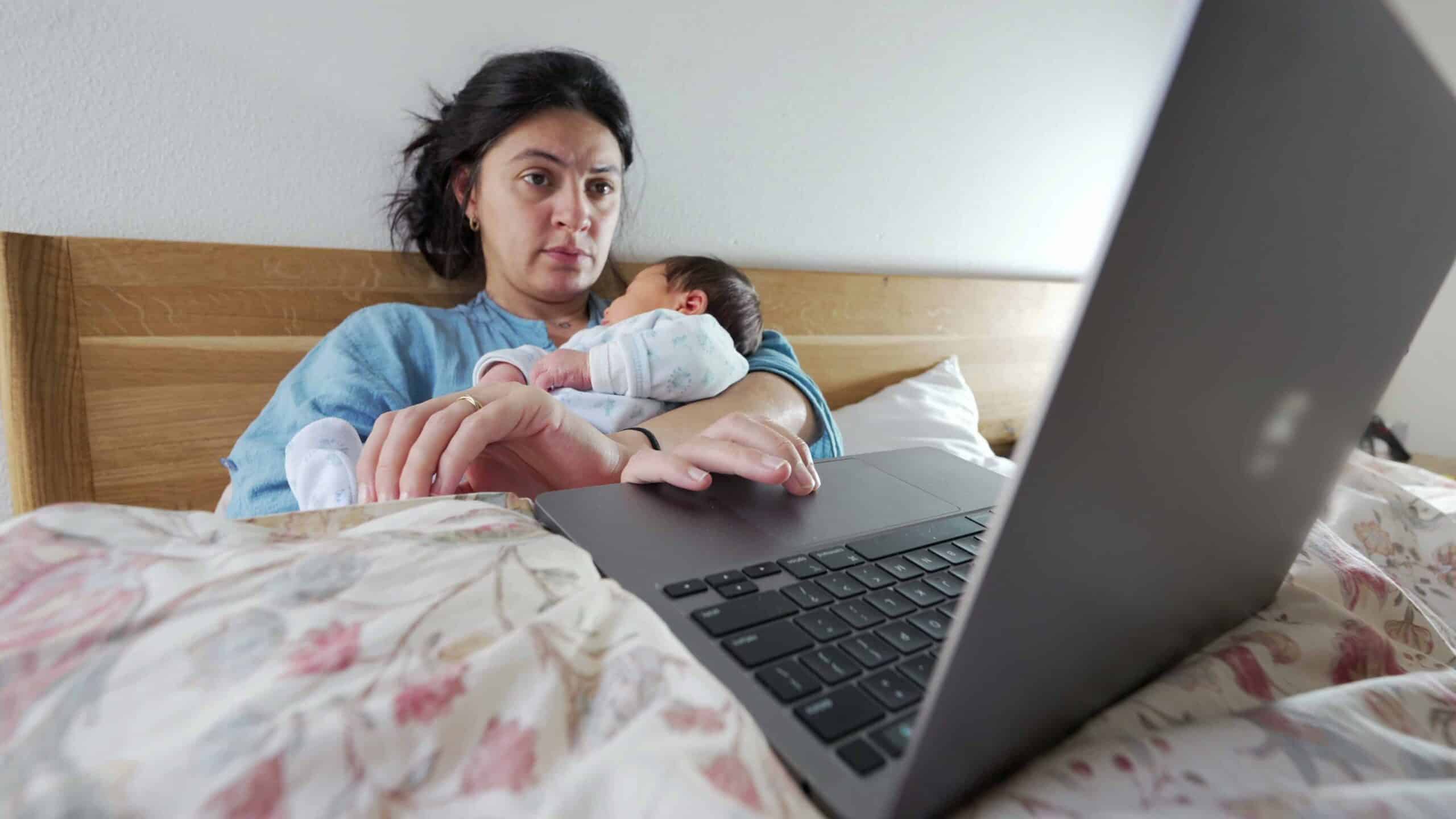
What Return-to-Work PTSD Can Feel Like
“Return-to-work PTSD” is not a formal diagnosis, but it describes a very real experience: feeling triggered, overwhelmed, or emotionally unsafe as maternity leave ends and work responsibilities resume.
This may show up as:
- Panic or dread before the first day back
- Intrusive memories of birth or postpartum complications
- Intense guilt about leaving the baby
- Feeling emotionally numb or detached
- Trouble focusing at work
- Hypervigilance about the baby’s safety
- Crying during commutes, pumping breaks, or quiet moments
- Feeling like everyone expects you to be “fine”
Some mothers may feel confused by the intensity of their reaction. They may think, Why am I struggling so much? Other people go back to work all the time.
But returning to work after birth isn’t just a schedule change. It’s a major emotional, physical, and relational transition.
When Maternity Leave Ends Before Healing Does
Maternity leave often ends on a calendar, not when a mother feels whole again.
For many parents, the timeline is shaped by workplace policies, financial pressure, job security, childcare availability, or insurance needs. These external timelines rarely account for the emotional reality of postpartum recovery.
You may still be healing from:
- A traumatic birth
- An emergency C-section
- A NICU stay
- Pregnancy loss before this baby
- Postpartum depression or anxiety
- Breastfeeding or pumping challenges
- Medical complications
- Sleep deprivation
- A sense of disconnection from yourself
Being expected to return to productivity while still recovering can feel deeply invalidating.
The world may be asking you to perform as your old self while you are still learning who you are now.

Why Going Back to Work Can Activate Trauma Responses
Trauma isn’t only about what happened. It’s also about how safe, supported, and in control you felt during and after the experience.
If birth, postpartum recovery, or early parenthood involved fear, helplessness, medical overwhelm, or emotional isolation, returning to work can activate the nervous system in powerful ways.
Triggers may include:
- Being separated from your baby
- Rushing in the morning
- Pumping at work
- Feeling watched or judged
- Losing control over your schedule
- Hearing others talk casually about motherhood
- Being expected to “catch up” quickly
- Feeling pressure to prove you are still capable
The body may interpret these stressors as signs of danger, even when the mind understands that work itself is not unsafe.
This is why you may feel reactive, tearful, shut down, or anxious without fully knowing why.

The Guilt of Leaving Your Baby
One of the most painful parts of returning to work can be the guilt.
You may feel guilty for leaving your baby. Guilty for needing income. Guilty for wanting adult interaction. Guilty for resenting the transition. Guilty for not feeling ready. Guilty for feeling relieved once you are away.
Motherhood often comes with impossible expectations.
Many mothers feel pressure to be fully devoted at home and fully competent at work. They’re expected to recover physically, bond emotionally, maintain a household, return professionally, and somehow do it all with gratitude.
That pressure can be exhausting.
Guilt doesn’t mean you’re doing something wrong. It often means you care deeply and are trying to navigate a transition that asks too much, too quickly.
When Work Becomes a Place of Emotional Overload
Returning to work may bring up emotional responses that feel hard to explain to others.
You may sit in a meeting while mentally tracking your baby’s feeding schedule. You may try to answer emails while replaying moments from the hospital. You may pump in a storage room and suddenly feel grief, anger, or loneliness rise up.
The workplace often leaves very little room for the emotional reality of postpartum life.
Even supportive employers may not understand how vulnerable this transition can feel. And when coworkers expect you to be “back,” it can create a painful disconnect between how you appear and how you actually feel.
On the outside, you may look productive.
On the inside, you may still be healing.

The Identity Shift No One Talks About
Going back to work after having a baby can create a deep identity shift.
You may wonder:
- Am I still the same professional I was before?
- How do I balance ambition and motherhood?
- Why does my old routine feel unfamiliar?
- Will people see me differently now?
- Can I still trust myself?
- What if I cannot do this the way I used to?
For some mothers, work used to feel like a place of confidence and competence. After birth, it may feel disorienting to return while carrying exhaustion, grief, anxiety, or a new sense of vulnerability.
This doesn’t mean you are less capable.
It means you are integrating a major life transition while trying to meet the demands of a world that often underestimates how much has changed.

How Therapy Supports the Return-to-Work Transition
Therapy gives mothers a space to slow down and name what they are carrying.
Support may include:
Processing Birth or Postpartum Trauma
If birth, NICU experiences, medical complications, or postpartum recovery felt traumatic, therapy can help process what happened in a way that feels safe and supported.
Reducing Anxiety and Hypervigilance
Therapy can help identify triggers, regulate the nervous system, and reduce the constant sense of alarm that may show up during separation from the baby.
Making Space for Grief and Guilt
Returning to work can bring grief over lost time, unmet expectations, or the version of maternity leave you hoped for. Therapy allows those feelings to be acknowledged without judgment.
Supporting Identity and Role Changes
Becoming a parent changes how you relate to your body, your work, your relationships, and yourself. Therapy can help you make sense of that shift with compassion.
Building Sustainable Coping Tools
Support can help you create realistic strategies for transitions, boundaries, emotional regulation, and communication during this season.
You Are Not Failing Because This Feels Hard
If returning to work feels overwhelming, it doesn’t mean you’re ungrateful. It doesn’t mean you are weak. It doesn’t mean you are failing as a parent or professional.
It means this transition is hard.
You’re allowed to need support. You’re allowed to feel conflicted. You’re allowed to miss your baby and still value your work. You’re allowed to want space and still feel guilty for taking it.
There’s no perfect way to return after maternity leave.
There’s only the real, human process of finding your footing again.
Support for Postpartum Transitions in Gilbert, AZ
At Nova Psychotherapy Services, our team provides compassionate, trauma-informed care for individuals navigating postpartum anxiety, birth trauma, identity shifts, and the emotional complexity of returning to work after maternity leave. Therapy offers a space to process what you have been through, understand what your nervous system is carrying, and move through this transition with more support.
If maternity leave is ending but healing still feels unfinished, you do not have to push through it alone. Support is available to help you feel more grounded, understood, and connected as you move into this next season.
Give us a call at (602) 890-0218 or start the conversation here today.